

Founder’s stories are admirable to all when they mention how their team of 5 brought out a productivity of 50.
A 5-person SaaS team today runs:
🔹12 internal GPT agents
🔹3 automation workflows
🔹2 AI SDRs
🔹A customer support bot
PwC reports productivity increases of 50% or more across development and service roles. Tasks that once required weeks now finish in days.
Here’s when we suggest people review and make decisions while agents scale.
What risk can be brought into this race?
💥Lack of accountability
💥Unchecked automated decisions
💥Legal and regulatory risk
💥Reputational damage
Here’s what I’ve learned building AI products for 18 years with over 100SaaS companies. AI accuracy isn’t just a technical problem. It’s an operational crisis that’s quietly destroying ROI across enterprises. And most companies are addressing it completely wrong.
The Gap That’s Killing Your Enterprise AI Strategy
Most organizations invest in AI projects that never reach real operations.
McKinsey found that 90% of failures happen during the shift from testing to production. At the same time, Netflix saves over one billion dollars per year through AI-driven systems.
Here is what usually goes wrong.
Random experiments
Weak foundations
Confused structure
The line of discipline really makes the grass greener on the other end.

What I have covered:
1. The pilot trap: Companies run random AI experiments with no systematic approach.
2. Starting in the wrong place: Successful companies follow a four-layer framework. There’s a foundational layer that comes first—skipping it kills the project.
3. Picking the wrong operating model: JP Morgan and Goldman Sachs both use the same approach: federated and central governance, distributed execution. It’s about matching reality.
The AI Roadmap that Will Save You Days

I review many roadmaps where most begin with a technical ambition. They speak about advanced models and conversational capabilities.
This is where you are hitting the wrong button to start. Effective roadmaps begin with friction.
Before choosing a model, ask:
Where do we lose time?
Where do we lose money?
Where do customers lose trust?
Technology is becoming interchangeable. Your advantage comes from system design.
There’s a four-step framework separating the 39% seeing returns from those stuck in pilot mode.
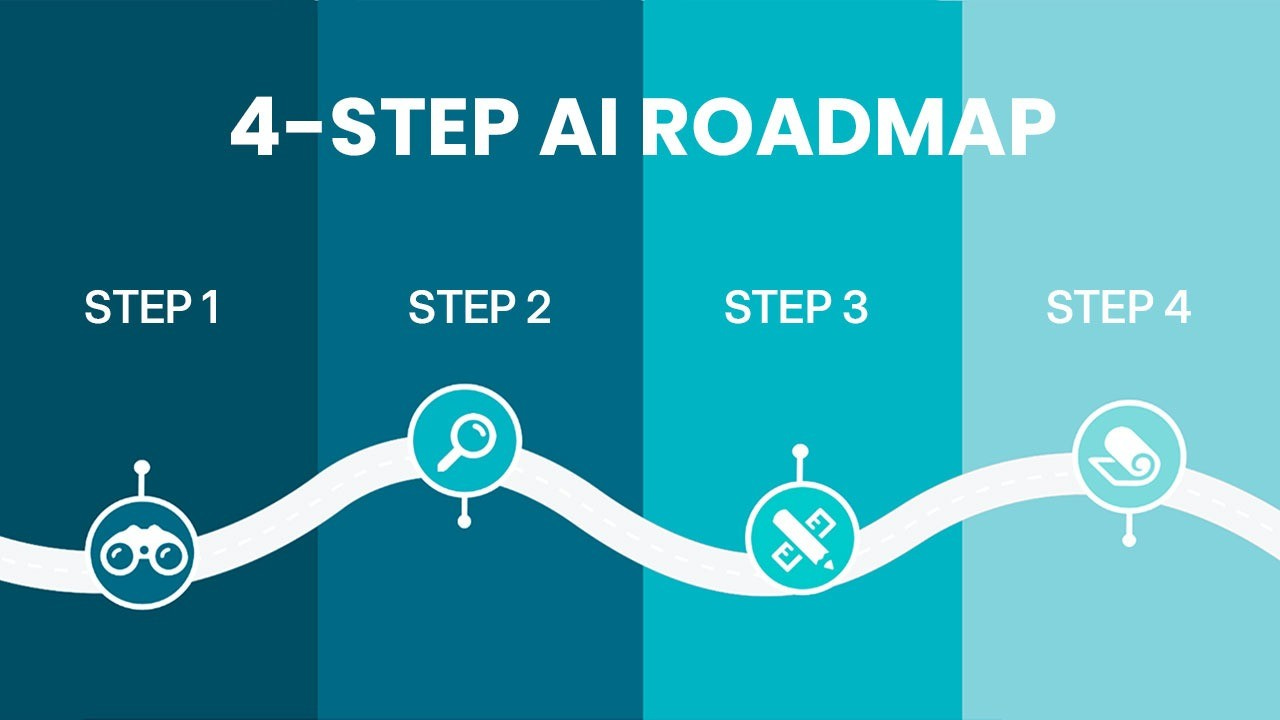
Step 1: Map friction.
Step 2: Simplify first.
Step 3: Assign ownership.
Step 4: Monitor and improve.
The Startup Model Is About to Change
What happens when the definition of a company fundamentally changes?
It’s “augmented intelligence”—how well your human-AI teams work together.
This isn’t sci-fi — it’s the inevitable shape of what I call the ‘autonomous company.’ And it will render traditional startups obsolete.
How will AI change business models?
New Startups will have the advantage of— ✅Capital ✅Headcount ✅ Distribution
But you need to rethink everything to build for agents, not just humans. Your org chart shifts from “who does what” to “who oversees what systems.” You become less builder, more conductor.
We’re not just automating tasks. We’re redefining what a company is.
If this challenges your current thinking, stay with me for more every Wednesday.