

Salesforce cut 4,000 people in 2025. Klarna said AI could handle most customer support. Entire industries started asking the same question: Is this where the white-collar job market starts shrinking?
But the more interesting story is what happened next.
The same companies that automated aggressively also started hiring again, just for different work.
Not the old roles.
Not the old workflows.
Not the same expectation.
New roles built around managing, correcting, orchestrating, and improving AI systems.
Every new role being created around AI is essentially a quality control layer. Agents break without humans behind them. The companies that understand this are hiring for exactly that.
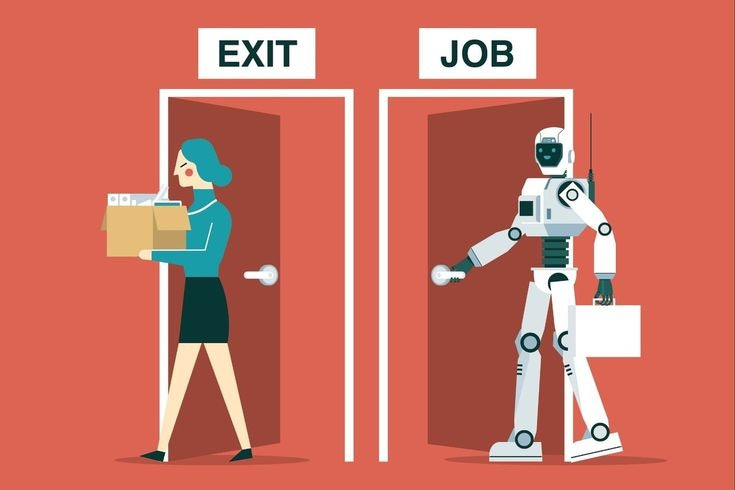
The “AI is killing jobs” panic got the headline. The second half of the story never did.
Every time a major technology shift happened, the panic came first, and the opportunity came second. It happened with ATMs, with the internet, and with mobile. The people who moved early captured the new roles. Everyone else spent two years catching up.
If you are trying to figure out where to position yourself in all of this, I put together a consolidated guide.
What Agents Actually Change?
Agents have taken over the execution layer. Outbound prospecting, follow-ups, reporting, and content drafts that work are no longer yours.
But every task agents take over creates a new gap. Strategy, QA, orchestration, tooling, customer experience, none of that runs itself. Someone still has to own it.
The companies hiring aggressively right now are hiring for exactly those gaps. I broke down what this looks like inside real teams.

Tune in to the best parts:
[4:03] The boring tasks agents are already doing, so your sales team does not have to.
[5:46] The tools making this happen inside real companies right now.
[7:38] Why your team is not getting smaller, just doing different work.
The roles being created right now that did not exist five years ago
The real question is not which jobs AI is replacing but which jobs exist specifically because AI cannot own its own outcomes.
AI Engineer salaries jumped to an average of $206,000 in 2025, a $50,000 increase from the year before, and that is just the baseline. The specialized roles being built around agentic AI are commanding 30 to 50 percent above that.
Look at these titles carefully. None of them existed five years ago. AI did not create them by being powerful. It created them by being incomplete.
Every gap in quality, workflow, customer experience, tooling, and revenue operations became a job title. That is what agentic AI actually does to a workforce.
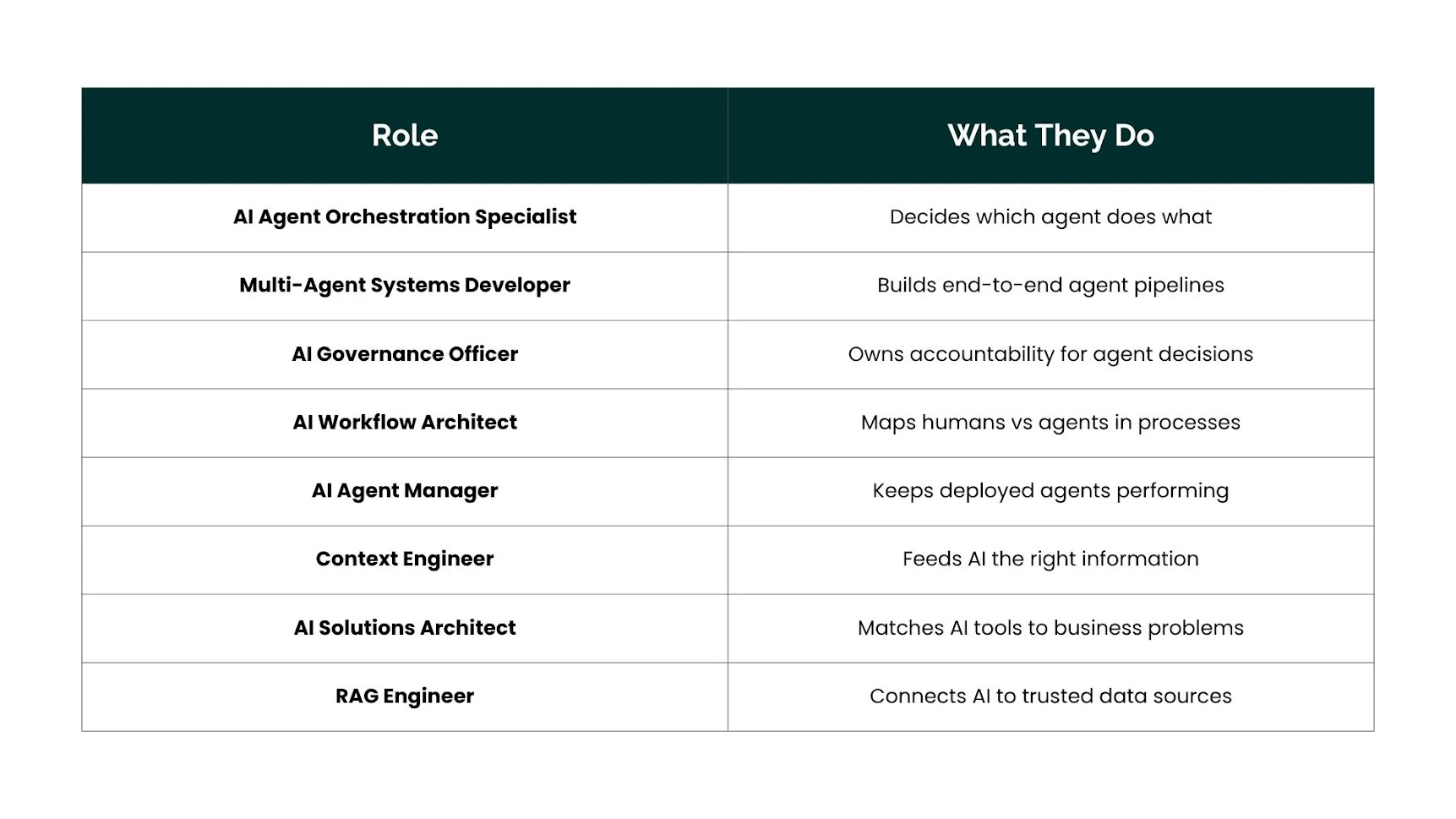
Before you build around any of these roles, understand what you are actually signing up for. Agents produce output, but they do not carry accountability.
Someone on your team still does. These three questions will tell you if your team is ready for that.
❓What happens when your agent gets it wrong?
❓Who checks the work it produces?
❓What does your team do with the time saved?

Smart companies already know these answers, and the way most of them are handling this shift might surprise you.
The Signal Everyone Is Walking Past Every Single Day
The companies that already know those answers are showing you exactly where they are. Every AI job posting is a live signal about where a company is in its AI maturity curve. Most teams are walking past it without reading it.
Stop asking whether AI will replace you. Ask which part of your role becomes more valuable when agents handle the repetitive work. The job board is already answering that question.
Ritesh Osta built an entire framework around turning these signals into a live pipeline. Here is what that looks like in practice.
[5:29] Why every AI job posting tells you exactly where a company is in its AI journey
[14:50] How to identify which parts of your role agents cannot replace
[22:01] How Ritesh’s team builds an entire pipeline from job board signals in under 30 seconds
The “AI kills jobs” story has been running for two years, and almost nobody stayed long enough to read what happened next at those same companies.

As Jensen Huang put it, you are not going to lose your job to AI. You are going to lose it to someone who uses AI efficiently.
The market is not shrinking. It is being rebuilt around roles, budgets, and infrastructure that most people have not positioned themselves for yet.
Being in that first group is a choice you make before the shift, not after it.
Thanks for sharing !